5 Outfit Mistakes Men Make for Job Interviews and How to Fix Them
Getting the interview is the hard part. What you wear to it shouldn't be what trips you up.
Most men don't lose an interview because of their outfit. They lose it because of fit, preparation, or how well they connect with the interviewer. But clothing still plays a role in that first ten seconds of impression, and small missteps can quietly undercut an otherwise strong candidate. The good news: these mistakes are easy to spot and even easier to fix once you know what to look for.
Here are the five outfit mistakes that show up most often, and exactly how to correct each one before your next interview.
Quick Overview: What Should Men Wear to a Job Interview?
If you only have two minutes, here's the short version:
- Research the company's dress code first. A law firm, a design studio, and a tech startup do not expect the same outfit, and guessing wrong in either direction can work against you.
- A suit is appropriate for corporate, financial, legal, and traditional office environments, and it's rarely the wrong call for a first interview when you're unsure.
- Business casual may be the smarter choice for startups, creative agencies, retail management, and many modern offices where a full suit can look mismatched to the culture.
- Fit matters more than price. A $150 suit that's properly tailored will look sharper than an $800 suit that's too big in the shoulders or too long in the sleeves.
- Clean shoes, neat grooming, and unwrinkled clothing carry more weight than people expect. They signal attention to detail before you've said a word.
- When in doubt, lean polished but simple. The safest interview outfit is one that looks intentional without pulling focus from what you're actually saying.
None of this replaces preparation, relevant experience, or how you communicate. Clothing is context. It helps the rest of your presentation land the way it's supposed to.
Mistake #1: Dressing Too Formally or Too Casually for the Company Culture

What it looks like: Showing up in a full three-piece suit to a casual creative agency, or walking into a client-facing finance interview in a blazer over a T-shirt.
Why it's a problem: The biggest interview mistake is often not dressing badly. It's dressing without considering where you're interviewing. Overdressing at a casual startup can read as out of touch with the culture. Underdressing at a formal company can read as not taking the opportunity seriously. Either way, the outfit becomes the story instead of your qualifications.
Where it matters most: This is highest-stakes for creative roles, tech startups, and hybrid workplaces where dress codes vary widely from one company to the next, and lowest-stakes for highly traditional industries like law, banking, and government, where formal dress is still the norm.
How to fix it: Check the company website, LinkedIn photos of current employees, and Glassdoor reviews before you choose an outfit. If you can't find anything, it's reasonable to email the recruiter and ask about the dress code. This is a common and accepted question, not an awkward one.
Practical alternative: For traditional corporate, legal, or financial interviews, business professional attire like a suit with a dress shirt and tie is the safer default. For startups, creative studios, or casual offices, a smart casual interview outfit (blazer, button-down or quality knit, chinos or dark denim, and clean leather shoes) usually reads as put-together without feeling stiff.
Exception: When interviewing virtually for a casual company, it's still worth dressing slightly more polished than what current employees wear day-to-day. A little more effort on interview day is expected and doesn't read as overdressed.
Mistake #2: Wearing Clothes That Fit Poorly
What it looks like: Jacket shoulders that extend past your actual shoulder, sleeves that swallow your hands, trousers pooling at the ankle, or a shirt so tight it strains at the buttons.
Why it's a problem: An expensive suit that fits poorly usually looks less polished than an affordable outfit that fits properly. Poor fit reads as careless or rushed, even when the material and brand are high quality. It also affects how you carry yourself, for example, clothes that are too tight or too loose make people fidget, which can come across as nervous energy in an interview setting.
Where it matters most: Fit issues are most noticeable in formal business professional and business formal settings, where the outfit is more structured and any imperfection stands out. In casual environments, a slightly relaxed fit is more forgiving.
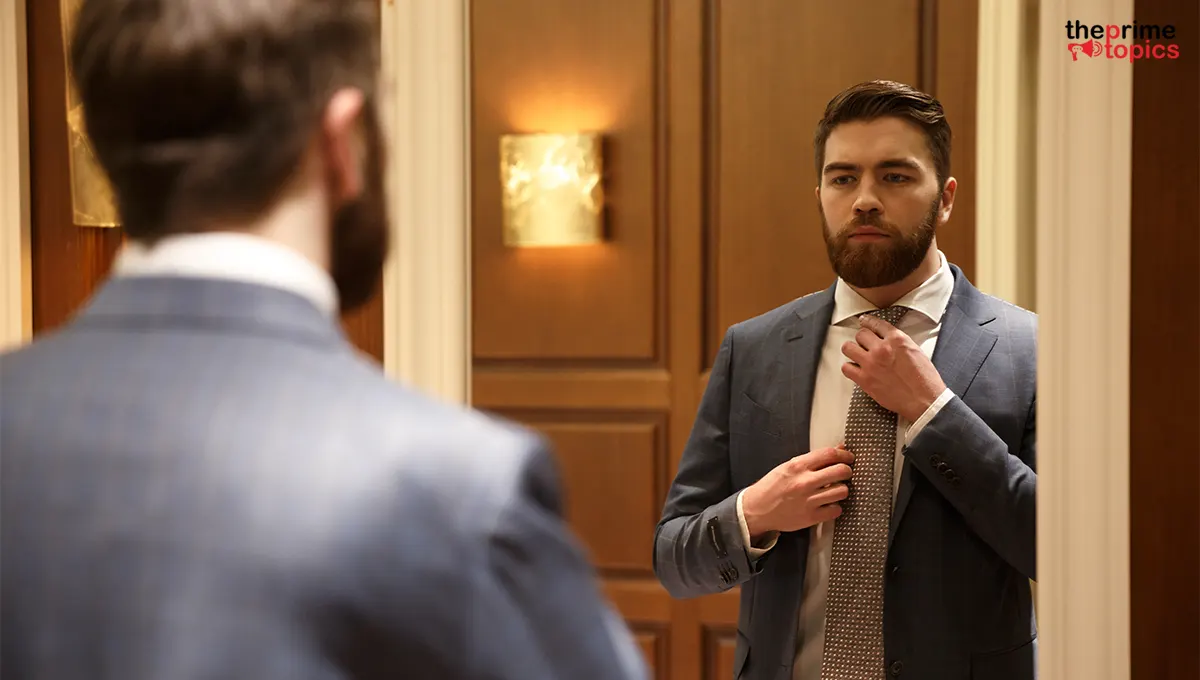
How to fix it: Check four points before interview day: shoulders (the seam should sit at the edge of your shoulder, not past it), sleeve length (shirt cuff should show about half an inch past the jacket sleeve), waist (jacket should close without pulling), and trouser break (a slight break at the shoe, not bunching on the floor).
Minor tailoring like hemming trousers or taking in a waist is inexpensive relative to the difference it makes.
Practical alternative: Choose a suit or separates in your actual size rather than sizing up "for comfort." A well-fitted charcoal or navy suit, or fitted separates for business casual, will outperform a bigger-name brand that doesn't fit correctly.
Exception: Fit standards are slightly more relaxed for smart casual and creative roles, where a more relaxed silhouette (like a slightly looser blazer or tapered chinos) is stylistically acceptable and even on-trend.
Mistake #3: Choosing Distracting Colors, Prints, or Accessories
What it looks like: A loud novelty tie, an oversized logo, a heavily patterned shirt, or stacked accessories like multiple bracelets, a large watch, and a pocket square that all compete for attention.
Why it's a problem: Small details become more noticeable when the rest of your outfit is simple, and the reverse is also true. When several bold elements are combined, the outfit becomes the focal point instead of the conversation. Interviewers are human, and visual distraction pulls focus even unintentionally.
Where it matters most: This applies broadly, but especially in business professional and business formal interviews, where a clean, neutral presentation is the expected norm. Creative industries allow more personal expression, but even there, one standout piece (not five) tends to look more intentional.
How to fix it: Build the outfit around one or two accent pieces at most, a subtle patterned tie or a colored pocket square, not both plus a statement watch. Keep the base of the outfit neutral: navy, charcoal, gray, or black.
Practical alternative: A solid or subtly textured tie in navy, burgundy, or deep green pairs well with a white or light blue dress shirt. If you want color, let it live in one place. The tie or the shirt, not several places simultaneously.
Exception: Creative and design-focused roles often welcome more personality in the outfit. A well-chosen colored blazer or unique tie can work in favor of a candidate applying to a design studio or media company, where visual sensibility is part of the job.
Mistake #4: Ignoring Shoes, Grooming, and Small Finishing Details
What it looks like: Scuffed or dusty dress shoes, mismatched belt and shoe color, visible wrinkles, unkempt facial hair, or overlooked details like untrimmed nails.
Why it's a problem: Interview shoes for men are one of the most commonly overlooked details, and one of the first things some interviewers notice, whether consciously or not. Grooming and finishing touches signal preparation. When everything else about the outfit is intentional but the shoes are neglected, it can make the whole look feel unfinished.
Where it matters most: Client-facing roles, corporate offices, and any position involving in-person meetings with customers or executives tend to weigh finishing details more heavily, since presentation is part of the job.
How to fix it: Polish or wipe down shoes the night before. Match belt color to shoe color (brown with brown, black with black). Trim facial hair, nails, and stray hair. Keep cologne minimal, a small amount is fine, but strong scents can be distracting in a small interview room.
Practical alternative: Classic black or brown leather oxfords or derbies work for both business professional and business casual interview outfit ideas for men, and they're a worthwhile investment because they pair with multiple outfits beyond the interview itself.
Exception: For very casual or creative workplaces, clean minimalist leather sneakers can sometimes work in place of traditional dress shoes — but this depends entirely on confirmed company culture, not assumption.
Mistake #5: Wearing Wrinkled, Damaged, or Poorly Coordinated Clothing
What it looks like: A shirt pulled straight from a drawer without ironing, a jacket with a loose button, mismatched patterns between shirt and tie, or an outfit that was never tried on together before interview day.
Why it's a problem: This is one of the most avoidable mistakes, and one of the most noticeable. Wrinkled or damaged clothing can suggest last-minute preparation, even when that's not actually the case. Coordination issues like a busy shirt with a busy tie, or colors that clash, can look accidental rather than intentional.
Where it matters most: This affects every interview type. Wrinkled clothing looks unpolished whether the dress code is formal or casual.
How to fix it: Try on the full outfit at least the night before, not just individual pieces separately. Check for loose threads, stains, or damage. Iron or steam anything that needs it, and hang the full outfit up so it's ready to go.
Practical alternative: If you're unsure about coordination, keep it simple: solid shirt, solid or subtly patterned tie, and a neutral suit. Simple, well-maintained pieces consistently outperform "creative" combinations that weren't tested beforehand.
Interview Outfit Mistakes at a Glance
|
Interview Outfit Mistake |
Why It Can Be a Problem |
How to Fix It |
Better Option |
|
Dressing too formally or too casually |
May not match the company culture |
Research the workplace beforehand |
Match the outfit to the role and company environment |
|
Poorly fitting clothes |
Can look unpolished, even in quality fabric |
Check shoulder, sleeve, waist, and trouser fit |
Choose properly fitted clothing, tailored if needed |
|
Distracting colors or accessories |
Pulls attention away from the conversation |
Limit the outfit to one or two accent pieces |
Neutral, coordinated pieces with a single accent |
|
Ignoring shoes and grooming |
Small details affect the overall impression |
Clean and prepare everything the night before |
Polished shoes and neat, simple grooming |
|
Wrinkled, damaged, or uncoordinated clothing |
Can appear unprepared, even if it isn't |
Try on the full outfit ahead of time |
Clean, pressed, well-maintained coordinated outfit |
How to Choose the Best Suit for a Job Interview
If your interview calls for a suit, a few decisions make the process easier.
Color: Navy and charcoal are the most versatile and widely accepted suit colors for interviews across nearly every industry. Both read as professional without feeling severe. Black is generally reserved for very formal settings (or works fine there too, but can feel closer to formal-event attire in some office contexts). Lighter grays and subtle patterns can work for business casual or creative interviews but are less universal.
Fabric: A mid-weight wool or wool-blend suit works across most seasons and climates in the US, making it a practical first purchase if you're building a wardrobe from scratch.
Fit over brand: As covered above, fit determines how polished a suit looks far more than the label does. If budget is a factor, a well-fitted suit from a mid-range option will outperform an expensive one that doesn't fit correctly.
Versatility: Choosing a suit you can wear again for future interviews, work events, or occasions offers better long-term value than buying something for one-time use. This is where working with a store that offers guidance on fit and coordination can help.
👉 The Men's Wearhouse is one option worth considering for men putting together or refreshing an interview wardrobe, since building out interview-ready pieces from scratch can feel overwhelming without some direction on what to prioritize first.
Business Formal vs. Business Professional vs. Business Casual
Understanding the difference helps you dress appropriately instead of guessing:
- Business formal: Dark suit, dress shirt, tie, dress shoes. Common in law, finance, and government interviews.
- Business professional: Similar to business formal but slightly more flexible a suit is still expected, though the tie may be optional depending on the company. This is the standard men's interview dress code for most corporate office roles.
- Business casual: Blazer optional, dress shirt or quality knit, chinos or dress trousers, no tie required. Common in many modern offices, retail management, and mid-size companies.
- Smart casual: The most relaxed of the four — a blazer over a button-down or henley, dark denim or chinos, clean leather shoes. Common at startups and some creative agencies, though it still looks more intentional than everyday weekend clothing.
Dressing for a Virtual Interview
Virtual interviews still call for real interview attire from the waist up and ideally the whole outfit, in case you need to stand or the camera angle shifts. A collared shirt or blazer, simple background, and good lighting matter more on camera than people expect. Avoid busy patterns, which can distort or "shimmer" on video calls, and stick to solid or subtly textured pieces instead.
The Night-Before Checklist
- Try on the full outfit together, not just individual pieces
- Check for wrinkles, stains, loose buttons, or damage
- Confirm shoes are clean and belt color matches
- Lay out or hang the outfit so it's ready to grab
- Charge your phone and set a backup alarm
- Print or save directions if the interview is in person
Frequently Asked Questions
What should a man wear to a job interview?
It depends on the company and role, but a well-fitted suit or business-casual outfit that is clean, coordinated, and appropriate to the workplace culture is the general standard for men's interview outfits in the US.
Should men always wear a suit to an interview?
No. A suit is expected in traditional corporate, legal, and financial settings, but many startups, creative agencies, and casual workplaces expect business casual or smart casual attire instead. When unsure, researching the company or asking the recruiter is the best approach.
What is the best suit color for a job interview?
Navy and charcoal are the most widely accepted and versatile choices across industries. Black can work for very formal interviews, and lighter grays suit more relaxed or creative environments.
Can men wear jeans to a job interview?
Dark, well-fitted jeans without rips or fading can work for some smart casual interviews at very casual companies, but they're generally not appropriate for business professional or business formal interviews.
Should men wear a tie to an interview?
A tie is typically expected in business formal and most business professional interviews. It's usually optional in business casual settings and unnecessary in smart casual environments.
What shoes are appropriate for a job interview?
Polished black or brown leather dress shoes are the safest choice for most interviews. Clean, minimal leather sneakers can work for confirmed casual workplaces, but this depends on the company.
How should an interview suit fit?
Jacket shoulders should sit at the edge of your natural shoulder, sleeves should show about half an inch of shirt cuff, the jacket should close without pulling, and trousers should have a slight break at the shoe.
The Takeaway
None of these five mistakes are really about fashion, infact they're about attention to detail. Researching the company, checking fit, keeping the outfit simple, taking care of shoes and grooming, and prepping everything the night before all send the same message: you took this seriously and you came prepared.
That won't replace strong answers or relevant experience, but it removes one more thing standing between you and a good first impression. If you're starting from scratch or need to fill gaps in your interview wardrobe, Men's Wearhouse is a reasonable starting point for building out versatile, interview-ready pieces you can wear well beyond a single interview day.