How to Layer Workout Clothes for Cold Weather in 2026 Without Overheating
Working out in cold weather requires more than throwing on a thick sweatshirt and heading outside. The right clothing combination keeps your body warm, manages sweat and allows you to move comfortably as your workout intensity increases. However, wearing too many layers can create another problem: overheating. Whether you enjoy winter running, outdoor cycling, brisk walking or early-morning workouts, choosing breathable fabrics and adjustable layers makes a noticeable difference. In 2026, performance fabrics, lightweight thermal wear and moisture-wicking workout clothing make winter fitness easier to manage. The trick is knowing what to wear, which fabrics to choose and when to remove an extra layer.
Why Layering Matters for Cold-Weather Workouts
Cold weather changes how your body manages heat during physical activity. At the beginning of a workout, your muscles may feel cold, and you might need extra insulation. However, as your heart rate increases, your body produces more heat and sweat.
Wearing a thick jacket or multiple heavy sweatshirts can trap excessive warmth, making you uncomfortable halfway through your session. On the other hand, wearing too little can expose you to cold air and leave damp clothing against your skin.
This is where the three-layer clothing system becomes useful.
For anyone learning how to layer for winter running, understanding the purpose of each layer is the first step.
The three main layers include:
- Base layer: Sits next to your skin and helps move sweat away from your body.
- Mid-layer: Provides insulation by retaining body heat.
- Outer layer: Protects against wind, rain and other outdoor conditions.
You do not always need all three layers. On moderately cold mornings, a breathable base layer and lightweight jacket may be enough. When temperatures approach freezing, adding an insulating mid-layer can improve comfort.
According to the American College of Sports Medicine's cold-weather guidance, moisture management and appropriate insulation are important because excessive sweating can leave moisture trapped between clothing layers.
The Three Layers You Need for Winter Workouts
Choosing the right combination of clothing makes winter exercise more comfortable without adding unnecessary bulk.
1. Base Layer: Keep Sweat Away From Your Skin
The base layer is the foundation of your winter workout outfit. It sits directly against your skin, so its main job is moisture management.
Look for lightweight, breathable materials such as:
- Polyester blends
- Merino wool
- Nylon-based performance fabrics
- Moisture-wicking synthetic materials
These fabrics help move sweat away from your skin, reducing the uncomfortable feeling of damp clothing during outdoor exercise.
Avoid regular cotton T-shirts as your primary base layer. Cotton absorbs moisture and dries relatively slowly, which can make you feel colder when temperatures are low.
2. Mid-Layer: Add Warmth Without Extra Weight
The mid-layer provides insulation by trapping warm air close to your body.
Depending on the weather, you can choose:
- Lightweight fleece tops
- Thermal running shirts
- Breathable insulated jackets
- Performance sweatshirts
The best mid-layer should feel comfortable without restricting movement. Avoid oversized sweatshirts that make running, cycling or strength training difficult.
If your workout involves high-intensity activity, a thinner insulating layer may be more practical than a thick fleece.
3. Outer Layer: Protect Yourself From Wind and Rain
The outer layer protects your body from environmental conditions such as strong winds, light rain and snow.
A lightweight wind-resistant or water-resistant running jacket can be useful during unpredictable winter weather.
Look for features such as:
- Breathable fabric construction
- Ventilation panels
- Adjustable cuffs
- Front zippers for temperature control
- Lightweight and packable designs
A fully waterproof jacket may trap excess heat during intense exercise, so choose breathable protection according to the weather conditions.
For many runners, a removable outer shell is a better choice than wearing a heavy winter coat throughout the workout.
How to Choose Workout Clothes According to Temperature
Not every winter workout requires the same clothing combination. Your outfit should depend on the actual temperature, wind chill, precipitation and exercise intensity.
Here is a simple comparison to help you plan your clothing.
|
Weather conditions |
Recommended clothing |
Useful accessories |
|
50–60°F (10–16°C) |
Lightweight long-sleeve base layer |
Running cap |
|
40–50°F (4–10°C) |
Moisture-wicking top and light jacket |
Thin gloves |
|
30–40°F (-1–4°C) |
Thermal base layer and breathable outer layer |
Gloves and headband |
|
20–30°F (-7 to -1°C) |
Thermal base layer, insulating mid-layer and wind-resistant jacket |
Warm gloves, beanie and neck gaiter |
|
Below 20°F (below -7°C) |
Insulated layers with weather protection |
Thermal socks, gloves and face covering |
What to Wear Running in 30 Degree Weather
If you are wondering what to wear running in 30 degree weather, the first thing to remember is that this recommendation assumes 30°F (approximately -1°C), not 30°C.
At this temperature, a practical outfit may include:
- A moisture-wicking long-sleeve thermal top.
- Lightweight running tights or thermal leggings.
- A breathable wind-resistant running jacket.
- Thermal gloves to protect your hands.
- A lightweight beanie or ear warmer.
- Moisture-wicking running socks.
You may not need a thick insulating mid-layer if you are planning a fast run. However, slower activities such as walking or light jogging may require additional warmth.
Also, check the wind chill before leaving home. A temperature of 30°F can feel considerably colder when strong winds are present.
Base Layer vs Thermal Underwear: What Should You Wear?
The difference between base layer vs thermal underwear often creates confusion when shopping for winter workout clothing. Although these terms are sometimes used interchangeably, they can refer to different types of garments.
A base layer is generally designed for active use. It focuses on moisture management, breathability and comfortable movement. Thermal underwear, on the other hand, traditionally focuses on retaining body heat and is often intended for everyday warmth or layering under regular clothing.
Here is how they compare:
|
Feature |
Base layer |
Thermal underwear |
|
Main purpose |
Sweat management and temperature regulation |
Retaining body warmth |
|
Fabric |
Polyester, merino wool and technical blends |
Wool, cotton blends and synthetic fabrics |
|
Breathability |
Usually designed for active movement |
Depends on construction |
|
Moisture management |
Often moisture-wicking |
Varies by material |
|
Best use |
Running, cycling and gym workouts |
Everyday winter wear and low-intensity outdoor activities |
For demanding workouts, choose a performance base layer that moves moisture away from your skin. Thermal underwear can also work if it has suitable moisture-wicking properties and allows comfortable movement.
How to Avoid Overheating During Winter Workouts
One of the biggest winter fitness mistakes is dressing for how cold you feel before exercising instead of considering how warm your body will become during activity.
If you want to understand how to avoid overheating in winter workout sessions, focus on breathable fabrics, removable layers and appropriate clothing thickness. Here are some practical ways to manage body temperature.
1. Start Slightly Cool
Your body naturally produces heat when you exercise. You should feel slightly cool when stepping outside rather than completely warm and bundled up.
A useful approach is to dress as though the weather is approximately 15–20°F warmer than the actual temperature, then adjust based on your personal comfort and conditions. This is a general guideline, not a fixed formula.
2. Choose Breathable Workout Fabrics
Heavy fabrics can trap sweat and restrict airflow. Instead, select lightweight synthetic materials or merino wool that help manage moisture.
Your cold weather workout clothes should provide enough insulation without making movement uncomfortable.
3. Use Zippers and Ventilation Features
Jackets with front zippers, ventilation panels and adjustable cuffs allow you to release excess heat during exercise.
If you start feeling too warm, unzip your jacket before removing the entire layer.
4. Remove Extra Layers When Needed
Wear clothing that you can easily remove or adjust. A lightweight jacket that can be tied around your waist or packed into a running belt is particularly useful.
This is especially helpful during long outdoor workouts when temperatures and exercise intensity may change.
5. Avoid Wearing Thick Cotton Sweatshirts
Cotton absorbs sweat and takes longer to dry. During cold-weather exercise, damp clothing can make you uncomfortable once your body starts cooling down.
Choose performance fabrics designed for active movement instead.
6. Adjust Your Workout Intensity
A high-intensity workout produces more body heat than a slow walk. If you are planning intervals, hill sprints or an intense cycling session, reduce unnecessary insulation.
For slower outdoor activities, an additional mid-layer may be useful.
What Accessories Make Winter Workout Outfits More Comfortable?
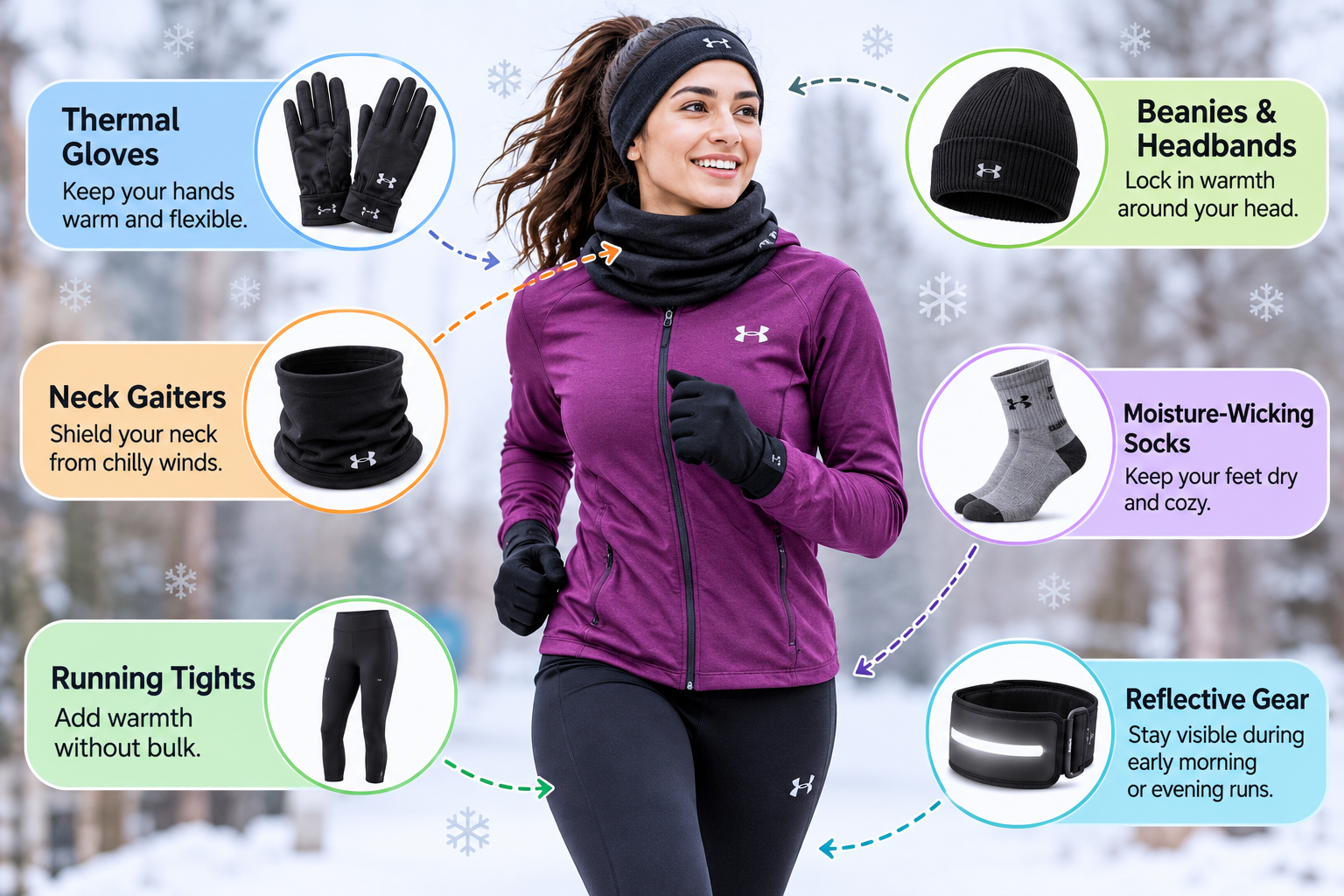
Your upper and lower body are not the only areas that need attention during cold-weather exercise. Small accessories can improve comfort without requiring another bulky clothing layer.
Consider these useful additions:
- Thermal gloves: Help keep your fingers comfortable during outdoor exercise.
- Beanies and headbands: Provide warmth around your head and ears.
- Neck gaiters: Protect your neck and can be adjusted when you feel warmer.
- Moisture-wicking socks: Help manage sweat and keep your feet comfortable.
- Running tights: Offer coverage and warmth while allowing flexible movement.
- Reflective accessories: Improve visibility during early-morning and evening workouts.
Under Armour offer performance clothing, thermal tops, leggings and running accessories designed for active use. When comparing options, look for fabric breathability, fit and moisture-management features rather than choosing the thickest garment.
A Simple Winter Workout Clothing Checklist for 2026
Before heading outside, take a few minutes to check your outfit. The right clothing combination can make your workout more comfortable and help you avoid unnecessary layers.
Use this simple checklist:
- Check the weather: Look at the actual temperature, wind speed and chances of rain or snow.
- Choose a suitable base layer: Pick a breathable, moisture-wicking top.
- Add insulation if necessary: Use a lightweight fleece or thermal top when temperatures drop.
- Check your outer layer: Make sure your jacket offers suitable wind or rain protection.
- Protect your hands and ears: Carry gloves and a headband or beanie when needed.
- Consider workout intensity: Wear fewer layers for running intervals and more insulation for slower activities.
- Carry an extra layer: Keep a dry top or jacket available for after your workout.
Under Armour is one option to consider when comparing winter performance apparel. Its moisture-wicking workout tops, thermal leggings and cold-weather accessories can help build a practical outdoor fitness wardrobe. Always check individual product fabric details and temperature suitability before purchasing.
Conclusion
Layering workout clothes for winter becomes easier when every garment has a clear purpose. Start with a moisture-wicking base layer, add insulation according to the temperature and finish with a breathable outer layer when wind or rain requires extra protection. Avoid heavy fabrics that trap sweat, and choose adjustable clothing that allows you to release excess heat during exercise. The best winter workout outfit keeps you comfortable without making you feel bundled up. With the right fabrics, accessories and temperature-based choices, you can enjoy outdoor fitness in 2026 without unnecessary overheating.
Frequently Asked Questions
1. How many layers should you wear for winter workouts?
Most outdoor winter workouts require two or three layers, depending on the temperature and activity. A moisture-wicking base layer, insulating mid-layer and weather-resistant outer layer provide a flexible starting point.
2. What is the best fabric for cold-weather workout clothes?
Polyester, merino wool and technical synthetic blends are popular choices. They offer moisture management, breathability and comfortable movement. Avoid using regular cotton as your primary workout layer because it absorbs sweat and dries slowly.
3. Should you wear thermal underwear while running in winter?
You can wear thermal underwear if it provides suitable breathability and moisture management. However, performance base layers are generally designed specifically for active movement and sweat control, making them a practical choice for running.
4. What should I wear running in 30°F weather?
A moisture-wicking long-sleeve top, running tights, lightweight wind-resistant jacket, gloves and a beanie are good starting options. Add an insulating layer if the wind chill is low or you tend to feel colder during exercise.
5. How can I stay warm during winter workouts without sweating too much?
Choose breathable fabrics, avoid excessive insulation and wear removable layers. Start slightly cool, adjust your jacket ventilation as you warm up and select clothing according to your workout intensity and outdoor conditions.