Can You Wear Running Shoes for Gym Workouts in 2026 or Do You Need Separate Shoes?
Buying separate shoes for running, weightlifting and everyday gym sessions can feel unnecessary, especially when one comfortable pair already seems to do everything. But are running shoes really suitable for every type of workout? The answer depends on how you train. Running shoes are designed to provide cushioning and support during forward movement, while gym training shoes generally offer better stability for lifting weights, strength exercises and lateral movements. Wearing the wrong footwear may affect your balance, grip and workout comfort. In 2026, with more versatile athletic footwear available, choosing between one multipurpose pair and separate training shoes requires a closer look at your fitness routine.
Quick Overview
- Running shoes are designed primarily for forward movement, cushioning and repetitive impact.
- Gym training shoes generally offer a more stable base for strength exercises and weightlifting.
- You can use running shoes for light gym sessions, walking and treadmill workouts.
- Heavy lifting and lateral movements usually require footwear with better stability.
- Cross-training shoes offer a practical middle ground for mixed gym routines.
- Shoe condition, fit and workout intensity matter when choosing the right pair.
Can You Wear Running Shoes for Gym Workouts?
Yes, you can wear running shoes for certain gym workouts, but they are not ideal for every exercise.
Running shoes are built with cushioning systems that absorb impact during repetitive steps. This makes them comfortable for treadmill sessions, warm-ups, walking and light cardio.
However, the same cushioning can become a disadvantage during exercises that require a stable connection with the floor. Activities such as squats, deadlifts and heavy lunges require balance and controlled movement. A soft or elevated running shoe sole may make these exercises feel less stable.
Here is where running shoes work well:
- Treadmill running: Their cushioning supports repetitive forward movement.
- Walking: They provide comfort for low-impact indoor walking.
- Light cardio: Suitable for moderate-intensity sessions that involve limited lateral movement.
- Warm-ups: Useful for walking, light jogging and basic mobility exercises.
Running shoes may be less suitable for heavy weightlifting, agility drills and exercises involving frequent side-to-side movements.
The important thing is to match your footwear with the type of activity rather than assuming one athletic shoe works equally well for every gym session.
Running Shoes vs Training Shoes: Understanding the Difference
The training shoes vs running shoes difference comes down to their construction and intended purpose.
Running shoes prioritise cushioning, forward movement and impact absorption. Training shoes focus more on stability, grip and support during multidirectional exercises.
Key Differences Between Running and Training Shoes
- Cushioning: Running shoes generally have more cushioning, while training shoes often have firmer midsoles.
- Sole design: Training shoes usually provide a broader, more stable platform for gym movements.
- Flexibility: Running shoes are designed for repetitive strides, while training shoes support a wider range of movements.
- Lateral support: Training shoes generally offer better support for side-to-side exercises.
- Heel structure: Some training shoes have a flatter, firmer heel that helps during strength exercises.
Neither category is automatically better. Your workout routine determines which footwear makes more sense.
Can You Wear Running Shoes for Weightlifting?
This is where footwear choice becomes more important. If you are wondering can you wear running shoes for weightlifting, the answer depends on how much weight you lift and the type of exercise you perform.
Running shoes with soft, thick cushioning may feel comfortable, but they can create an unstable surface during heavy lifts. When you perform squats, deadlifts or overhead presses, your feet need a firm connection with the floor.
Here are some reasons running shoes may not be the best option for heavy lifting:
- Soft cushioning: Thick midsoles can compress under heavy loads and affect balance.
- Elevated heels: A higher heel-to-toe drop may change your foot position during certain exercises.
- Limited lateral support: Running shoes are primarily designed for forward movement.
- Sole flexibility: Some running shoes have flexible platforms that may feel less stable under heavy weights.
When Are Running Shoes Suitable for Weight Training?
You can generally use running shoes for lighter gym activities, such as:
- Bodyweight squats
- Light dumbbell exercises
- Seated strength machines
- Core workouts
- Light resistance training
For heavy barbell squats and deadlifts, a flat, firm training shoe or a dedicated weightlifting shoe is usually a better option.
If your workout includes both running and lifting, consider changing footwear before moving to heavier exercises. The right shoe provides a more stable platform and helps you maintain better control during your movements.
Cross Trainers vs Running Shoes: Which Is Better for the Gym?
When comparing cross trainers vs running shoes gym, the biggest difference is movement support.
Cross-training shoes are designed for workouts that involve multiple activities, including strength training, jumping, short cardio sessions and lateral movements. Running shoes focus more on cushioning and forward motion.
Why Choose Cross-Training Shoes?
- Better stability: Their firmer soles provide a more grounded feel during strength exercises.
- Multidirectional support: They help support side-to-side movements during functional training.
- Versatility: They can handle different activities within one gym session.
- Durable construction: Many models feature reinforced uppers and outsoles for demanding workouts.
- Balanced cushioning: They provide a combination of comfort and stability for mixed training routines.
However, cross-training shoes are not necessarily ideal for long-distance running. Their firmer construction may feel less comfortable during extended treadmill sessions.
If your routine includes HIIT, resistance training, lunges and short cardio intervals, cross trainers can be a practical choice. If running is your primary activity, dedicated running shoes are generally more suitable.
Can One Pair Work for Both Gym and Treadmill Workouts?
Many fitness enthusiasts prefer using one pair of shoes for everything. This is understandable, especially if you visit the gym several times a week and switch between cardio and strength exercises.
If you are searching for the best shoes for gym and treadmill same pair, look for versatile cross-training footwear with the following features:
- Moderate cushioning: Enough comfort for short treadmill runs without creating excessive softness during gym exercises.
- Stable outsole: A firm base that supports controlled movements and light lifting.
- Good traction: Reliable grip on gym flooring and treadmill surfaces.
- Breathable upper: Mesh materials help improve airflow during longer sessions.
- Secure fit: A comfortable heel lock and suitable toe-box space prevent unnecessary foot movement.
A versatile training shoe can work well for short treadmill warm-ups, moderate cardio and general gym exercises. However, if you regularly run several kilometres on the treadmill, a dedicated running shoe will offer a more suitable cushioning experience.
Similarly, heavy weightlifting deserves a stable shoe rather than an extremely cushioned running model.
A practical approach: If your workout consists of 10–15 minutes of treadmill running followed by moderate strength exercises, a versatile cross-training shoe may be sufficient. For longer runs or heavy lifting, separate footwear is worth considering.
How to Choose the Right Gym Shoes in 2026
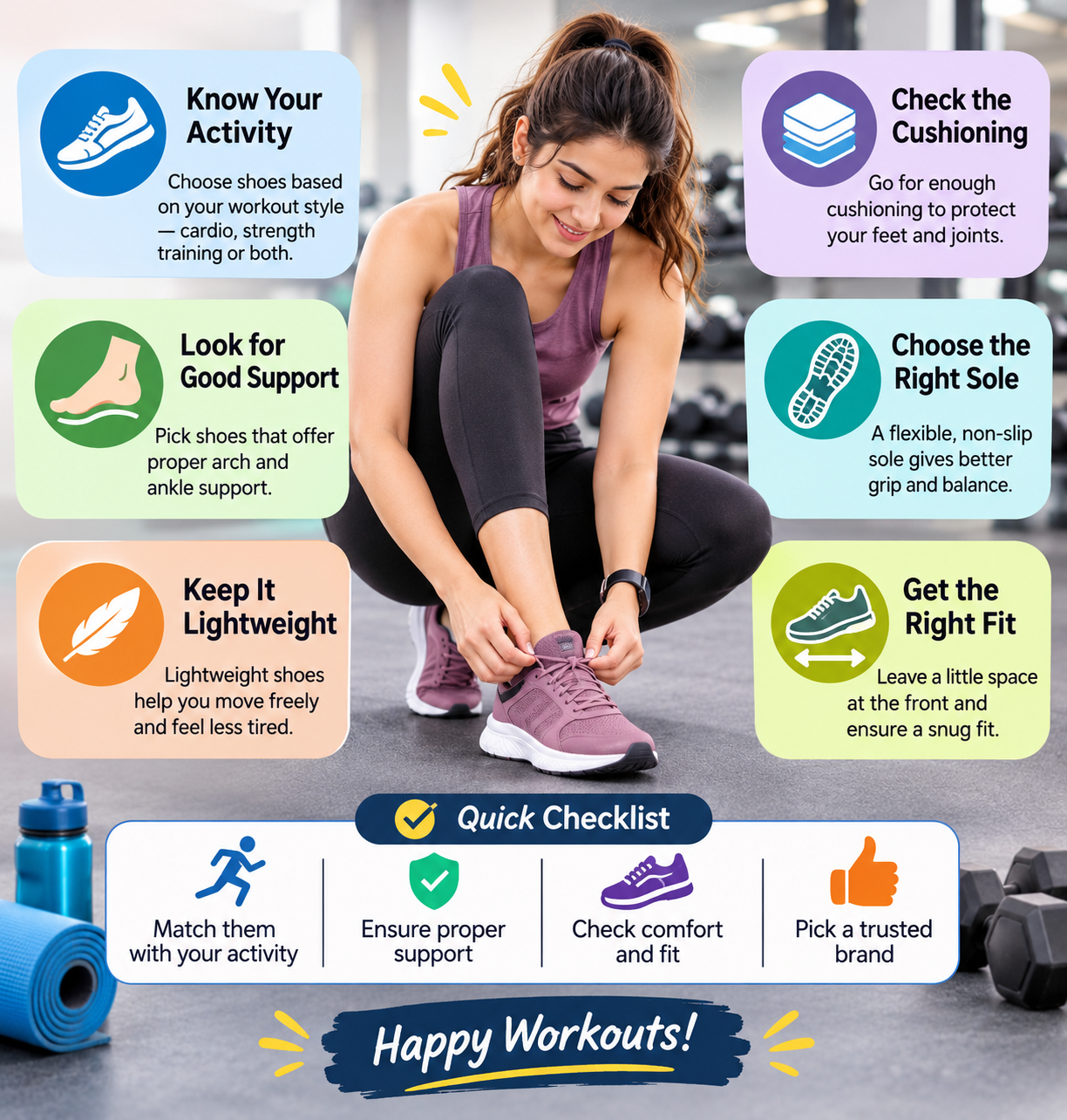
Choosing gym footwear should start with your workout routine, foot shape and comfort requirements. Marketing claims and attractive designs should come second.
Here are some important factors to consider before buying your next pair.
1. Check the Sole and Cushioning
For strength training, look for a firmer sole that provides a stable platform. For running, prioritise cushioning that feels comfortable during repetitive impact.
2. Look for Proper Grip
The outsole should provide reliable traction on gym floors. Good grip is especially useful during lunges, jumps, quick direction changes and circuit workouts.
3. Choose the Right Fit
Your toes should have enough room to move naturally, while the heel should remain secure. Shoes that feel too tight or allow excessive foot movement can become uncomfortable during exercise.
4. Consider Your Workout Frequency
Someone who visits the gym twice a week for light cardio may not need specialised weightlifting footwear. However, people who regularly perform heavy resistance training may benefit from dedicated training shoes.
5. Compare Training Features
Look for supportive sidewalls, durable uppers, stable midsoles and flexible forefoot construction. These features can make a noticeable difference during mixed gym sessions.
Brands such as Under Armour offer different footwear options for running and training. Its training collections include designs focused on ground contact and stability, while its running shoes prioritise cushioning and forward movement.
When to Replace Gym Shoes and Running Shoes
Even the best athletic shoes lose their performance features with regular use. Worn-out soles, reduced cushioning and damaged uppers can affect comfort and stability during workouts.
Knowing when to replace gym shoes helps you avoid training in footwear that no longer provides adequate support.
Watch for these signs:
- Worn-out outsole: The tread becomes smooth, reducing grip on gym surfaces.
- Reduced cushioning: Your shoes feel noticeably harder or less supportive than before.
- Uneven sole wear: One side of the outsole becomes more worn than the other.
- Damaged upper material: Torn mesh, loose stitching or damaged heel support affects the fit.
- Frequent discomfort: New foot discomfort during familiar workouts may indicate that your shoes need attention.
Running shoes are often replaced after approximately 300–500 miles (480–800 kilometres), although the actual lifespan depends on shoe construction, running style, body weight and usage conditions. Gym shoes do not have one fixed replacement schedule, so inspect their condition regularly.
Under Armour offers footwear designed for different training needs, but even durable gym shoes require regular inspection. Replace them when their cushioning, grip or structural support deteriorates.
A Simple Checklist Before Buying Your Next Gym Shoes
Use this checklist to narrow down your options:
- Identify your primary workout: running, weightlifting, HIIT or mixed training.
- Check whether you need cushioning or a firmer, more stable sole.
- Look for suitable grip and lateral support.
- Make sure the shoes fit comfortably around your toes and heels.
- Consider how frequently you train and how much wear your shoes will experience.
- Try both shoes and walk around before making a purchase.
- Check the manufacturer's sizing and product specifications.
Under Armour is one brand worth comparing when shopping for running and gym footwear. Focus on selecting a model that matches your exercise routine rather than choosing a pair simply because it looks versatile.
The Bottom Line
Running shoes can work perfectly well for treadmill sessions, walking, warm-ups and light gym exercises. However, heavy weightlifting, HIIT and workouts involving frequent side-to-side movements usually require footwear with better stability and grip. If your fitness routine combines different activities, cross-training shoes can offer a practical middle ground. Before buying another pair, consider your workout intensity, shoe construction and comfort. Separate running and training shoes may involve an extra purchase, but choosing the right footwear can make your gym sessions more comfortable and controlled in 2026.
Frequently Asked Questions
1. Can I wear running shoes for everyday gym workouts?
Yes. Running shoes are suitable for treadmill sessions, walking, light cardio and some basic strength exercises. However, they may not provide enough stability for heavy lifting or exercises involving quick lateral movements.
2. Can you wear running shoes for weightlifting?
You can wear them for light resistance exercises, but they are generally not recommended for heavy squats and deadlifts. Their softer cushioning may compress under heavy loads, making your footing feel less stable.
3. Are cross-training shoes better than running shoes for gym workouts?
Cross-training shoes are generally better for mixed gym routines because they offer a firmer base, better lateral support and multidirectional grip. Running shoes are more suitable for repetitive forward movement and longer cardio sessions.
4. Can I use the same shoes for treadmill running and weight training?
Yes, if your routine includes short treadmill sessions and moderate strength exercises. A versatile cross-training shoe can handle both activities reasonably well. For long-distance running or heavy lifting, separate footwear is a better choice.
5. How often should I replace my gym shoes?
There is no fixed replacement timeline for gym shoes. Check their grip, cushioning, sole condition and overall fit regularly. If the shoes become unstable, damaged or uncomfortable, consider replacing them.