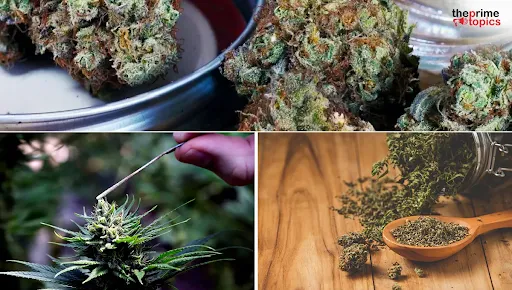
Delta-9 vs THCa vs Delta-8: What the Difference Actually Means When You Are Shopping Online
Shopping for hemp THC products online can quickly become confusing. Labels may feature Delta-9, THCa, Delta-8 or several cannabinoids in the same product, making it difficult to know what you are actually buying. Although these compounds come from the same cannabis plant family, they are chemically different and can behave differently when consumed. Their legal treatment can also vary depending on the product and where you live. Understanding the basics can make online shopping easier and help you read product labels more carefully.
Quick Overview
Delta-9 THC, THCa and Delta-8 THC are different cannabinoids with different chemical structures and properties.
Delta-9 THC is the cannabinoid most commonly associated with the intoxicating effects of cannabis.
THCa is the acidic precursor to THC and can convert into THC when exposed to heat through decarboxylation.
Delta-8 THC is another intoxicating cannabinoid that is chemically related to Delta-9 THC.
The legal status of hemp-derived products can depend on federal rules, state laws, product composition and how the product is marketed.
Before ordering, check the cannabinoid profile, laboratory testing, serving information and laws that apply where you live.
Delta-9 vs THCa vs Delta-8 Difference Explained
The simplest way to understand the delta 9 vs thca vs delta 8 difference is to look at what each compound actually is.
What Is Delta-9 THC?
Delta-9 THC, or delta-9-tetrahydrocannabinol, is the cannabinoid most closely associated with the intoxicating effects of cannabis. It occurs naturally in cannabis and can be present in both marijuana and hemp.
Under the federal definition established by the 2018 Farm Bill, hemp is cannabis and its derivatives containing no more than 0.3% Delta-9 THC on a dry-weight basis. However, this federal definition does not mean every hemp-derived product is automatically legal in every situation. FDA rules and state laws can also apply.
When shopping online, pay attention to whether a product's label refers to Delta-9 concentration, total THC or another measurement. These details can make a significant difference in understanding what you are purchasing.
What Is THCa?
THCa stands for tetrahydrocannabinolic acid. It is the acidic form of THC found in raw cannabis.
A key point in the delta 9 vs thca vs delta 8 difference is that THCa and Delta-9 THC are not the same compound. THCa can convert into Delta-9 THC when exposed to heat, a process known as decarboxylation. USDA hemp guidance specifically accounts for THCa when determining potential total THC in hemp testing.
This matters when you are shopping for products marketed as “THCa.” The product's intended use, testing method and cannabinoid profile can all affect how you should interpret the label.
What Is Delta-8 THC?
Delta-8 THC is another cannabinoid with intoxicating effects. It is chemically related to Delta-9 THC but has a different molecular arrangement.
Unlike Delta-9 THC, Delta-8 typically occurs naturally in cannabis in relatively small amounts. The FDA notes that concentrated Delta-8 products are commonly manufactured from hemp-derived CBD. The agency has also raised concerns about product variability, labeling and potential contaminants associated with some manufacturing processes.
So, if you are looking at hemp thc types explained, remember that “hemp-derived” describes the source or legal category of the material, not necessarily the effect or identity of the cannabinoid itself.
What Is THCa vs Delta-9 Hemp?
A common question is what is thca vs delta 9 hemp when both appear on online product pages.
The key difference is their chemical form. THCa is an acidic cannabinoid precursor, while Delta-9 THC is the intoxicating THC compound. Heating THCa can convert it into Delta-9 THC.

This distinction becomes especially important when reading laboratory reports. A product might show separate THCa and Delta-9 values, along with a calculated total THC value. Don't assume that a low Delta-9 number tells the entire story.
Delta-8 vs Delta-9: Which Is Stronger?
Delta-8 and Delta-9 are both intoxicating cannabinoids, but consumers may experience them differently. Individual responses can vary based on factors such as product formulation, dose, method of consumption and personal sensitivity.
Rather than choosing based purely on which one sounds stronger, focus on the actual cannabinoid concentration and serving size.
The FDA has specifically warned that Delta-8 products can have psychoactive and intoxicating effects and that formulations and concentrations may vary between products.
Delta-8 vs Delta-9 Which Is Legal?
The question delta 8 vs delta 9 which is legal does not have one universal answer.

At the federal level, the 2018 Farm Bill established a hemp definition based on Delta-9 THC concentration, while state laws may impose additional restrictions on Delta-8, Delta-9 and other hemp-derived cannabinoids. FDA requirements can also apply to products containing cannabis-derived compounds.
That means you should not assume that a product advertised as “federally compliant hemp” is legal everywhere. Always check the current rules applicable to your state before ordering.
Understanding the Difference Between Hemp Cannabinoids
The difference between hemp cannabinoids becomes easier to understand when you separate three things: the cannabinoid itself, how much is present and how the product is made.
Here's a simple comparison:
|
Cannabinoid |
What It Is |
Key Point |
What to Check Online |
|
Delta-9 THC |
Intoxicating cannabinoid |
Commonly associated with the cannabis “high” |
Concentration and current local laws |
|
THCa |
Acidic precursor to THC |
Can convert to THC when heated |
THCa, Delta-9 and total THC values |
|
Delta-8 THC |
Intoxicating cannabinoid |
Chemically related to Delta-9 |
Lab testing, concentration and local laws |
|
CBD |
Non-intoxicating cannabinoid |
Does not produce the typical THC “high” |
Ingredients and third-party testing |
How to Read a Hemp THC Product Label
When shopping online, don't rely only on the product name. Read the complete label and product description.
Look for the Cannabinoid Profile
Check whether the product contains Delta-9, Delta-8, THCa or a combination of cannabinoids. A product name alone may not tell you the complete formulation.
Check the Serving Information
Look at the amount per serving as well as the total cannabinoid content in the entire package. These are not necessarily the same number.
Find the Certificate of Analysis
A reputable brand should provide access to independent laboratory testing where applicable. A COA can help you verify the cannabinoid profile and, depending on the testing panel, check for certain contaminants.
Check the Manufacturing Information
Pay attention to whether the company provides useful information about sourcing, manufacturing and quality control.
Mood US can be assessed using the same approach. Look beyond the product name and examine the available product details, testing information and labeling before making a purchasing decision.
Why Third-Party Testing Matters
Third-party testing can provide useful information that a product advertisement cannot. Independent laboratory results may help confirm cannabinoid concentrations and identify certain contaminants.
This is particularly relevant with Delta-8 products because the FDA has raised concerns about manufacturing processes, variable formulations and possible contamination.
If a product page makes impressive claims but provides little supporting information, take a closer look before ordering.
Don't Confuse Hemp With Non-Intoxicating
One of the biggest shopping mistakes is assuming that anything labeled “hemp” is non-intoxicating.
Hemp can contain cannabinoids such as Delta-9 THC and Delta-8 THC, both of which can have intoxicating effects. The FDA specifically notes that Delta-8 products can produce psychoactive and intoxicating effects.
The word “hemp” therefore does not tell you how a product will affect you. The specific cannabinoid profile matters.
What to Check Before Ordering Online
Before purchasing, run through this quick checklist:
- Read the full cannabinoid profile.
- Check the amount per serving.
- Look for current third-party laboratory testing.
- Review the COA where available.
- Check ingredients and manufacturing information.
- Confirm the product is permitted where you live.
- Avoid products making unsupported medical claims.
- Keep intoxicating cannabinoid products away from children and pets.
If you're considering Mood US or another hemp THC brand, using the same checklist for every product can help you make a more informed choice rather than relying on marketing language alone.
Final Thoughts
The delta 9 vs thca vs delta 8 difference comes down to chemistry, formulation, effects and legal treatment. Delta-9 THC is the familiar intoxicating THC, THCa is its acidic precursor that can convert to THC when heated, and Delta-8 is a related intoxicating cannabinoid.
When shopping online, don't judge a product by its name alone. Read the cannabinoid profile, check independent testing and understand the rules in your location. A little label research can make a big difference when navigating today's expanding hemp market.
Mood US is another example of a brand that shoppers can evaluate through the same fundamentals: product transparency, cannabinoid information, testing and clear labeling.
FAQs
1. What is the main difference between Delta-9 THC and THCa?
THCa is the acidic precursor to THC, while Delta-9 THC is the intoxicating form. Heat can convert THCa into Delta-9 THC through decarboxylation.
2. Is Delta-8 the same as Delta-9 THC?
No. Delta-8 and Delta-9 are different cannabinoids with related chemical structures. Both can have intoxicating effects, although products and individual experiences can differ.
3. Delta-8 vs Delta-9 which is legal?
Legality depends on the specific product, federal rules and state law. Do not assume that a hemp-derived product is legal everywhere simply because it is sold online.
4. Does THCa turn into THC?
Yes. When THCa is exposed to sufficient heat, it can undergo decarboxylation and convert into Delta-9 THC.
5. What should I check when buying hemp THC online?
Check the cannabinoid content, serving size, ingredients, third-party testing, COA, manufacturing information and applicable local laws before placing an order.